Vistaar WebX Brand Development Agency

branding strategy

brand personality in 2026 for businesses

Stop Being “Just Another Company” in 2026: 5 Ways to Inject Personality into a Boring Industry.

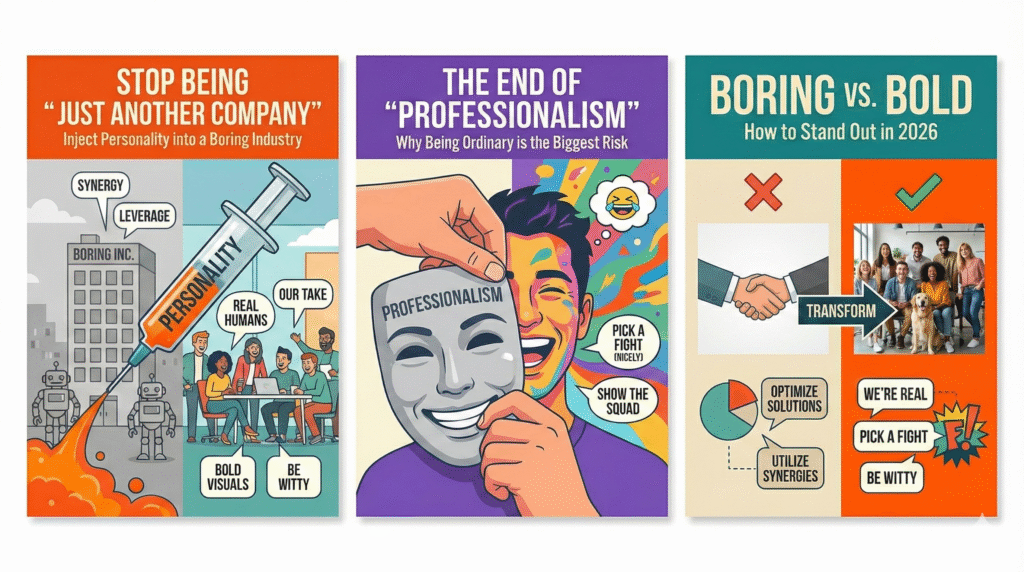
Let’s be real for a second. Most websites feel like they were written by a robot that’s had too much coffee and zero soul. In an era of AI everything, “professionalism” has become a code word for invisible. At Vistaar WebX, we think being ordinary is the biggest risk you can take. Whether you’re in logistics or healthcare, here is how you stop blending into the background. Ditch the “Corporate Speak” Stop “leveraging synergies” and “utilizing end to end solutions”. Humans don’t talk like that. If you wouldn’t say a sentence to a client over a cup of tea in Bhopal, don’t put it on your site. If your copy feels like a LinkedIn bot wrote it, delete it. Show the “Squad” People buy from people, not logos. Hide those stock photos of people in suits shaking hands. It is fake and everyone knows it. Feature your actual team, messy desks and all. At Vistaar, we lean into our Squad culture because transparency builds more trust than a polished corporate wall ever could. Pick a Fight (Nicely) Personality comes from having an opinion. Take a stand on a status quo everyone hates. Maybe it is why expensive logos are a waste of money for startups. When you say what everyone else is thinking, you instantly become a leader instead of just another vendor. Visual Storytelling If your industry is dry, your visuals need to be high octane. Clean design isn’t about being empty. It is about removing the clutter so your message can actually breathe. Move away from generic blue and grey palettes. Use bold typography and custom photos that tell a story. Be Witty, Not Just “Wise” Who says B2B can’t be funny? A well placed joke breaks the ice. It shows you are confident enough in your work that you don’t need to hide behind a stiff collar. Use humor to talk about client pain points. If they are frustrated with slow service, joke about it and then show them the solution. The Vistaar Take: In 2026, your greatest competitive advantage isn’t price. It is your personality.


Stop Being “Just Another Company” in 2026: 5 Ways to Inject Personality into a Boring Industry. Read More »

review your brand before marketing strategy

What to Review in Your Brand Before Planning This Year’s Marketing

Before calendars fill up and campaigns start taking shape, most businesses jump straight into planning.Taking time to review your brand before marketing helps ensure that what you build this year rests on clarity, not assumptions. Before planning this year’s marketing, it’s worth taking a quiet look at your brand, not to redesign it, but to understand whether it’s actually ready to support what you’re about to build. Start With the Basics You Assume Are Clear Most teams believe they’re clear on what their brand stands for. In practice, that clarity tends to live in people’s heads rather than in the brand’s output. Different team members explain the business differently. Different platforms highlight different priorities. None of it is wrong, but together it creates friction. Before planning marketing activity, it helps to ask: Can we explain what we do in one simple sentence? Would different people in the business describe us the same way? Does our messaging reflect where the business is now, not where it was a year ago? If these answers feel inconsistent, marketing plans will inherit that confusion. Look Closely at How Your Brand Communicates Marketing amplifies whatever already exists. If your brand communication is clear, marketing makes it stronger. If it’s scattered, marketing spreads that scatter faster. Review how your brand sounds across touchpoints, website copy, social media captions, emails, and ads. Pay attention to tone more than tactics. Does it feel like one voice, or several? Does it sound confident, or overly explanatory? These details seem small, but they shape how people respond to your campaigns later. Check for Consistency Before You Add More At the start of the year, there’s often a push to “do more”: more platforms, more content, more activity. Before adding anything, it’s worth checking whether what already exists is aligned. Are visuals consistent across channels? Does your messaging change depending on where someone finds you? Do your campaigns match the impression your website creates? Inconsistency doesn’t always look dramatic. Sometimes it just feels slightly off. And that feeling is enough to reduce trust, even if the marketing itself is well executed. Revisit Who You’re Actually Talking To Audiences change quietly. Over time, businesses attract different kinds of customers than they originally expected. Services evolve. Priorities shift. But branding often stays frozen around an earlier version of the audience. Before planning marketing for the year, it helps to ask: Who engages with us most now? Who do we actually want more of this year? Are we still speaking to the right group? Marketing works best when it speaks to a clearly defined audience, not a general one. Make Sure Your Brand Can Support Your Goals Marketing goals don’t exist in isolation. If your goal this year is growth, visibility, or expansion, your brand needs to be able to carry that weight. If the brand feels unclear or inconsistent, marketing efforts tend to work harder for smaller returns. Reviewing your brand first helps you spot gaps early, before they show up as underperforming campaigns or mixed responses. A Practical Way to Approach It This review doesn’t need to turn into a long internal exercise. Sometimes it’s as simple as stepping back and asking: Does our brand feel clear from the outside? Are we communicating with intention, or just staying active? Would our current brand help or hinder the plans we’re about to make? Those answers usually guide the next steps on their own. A Thought to End On Marketing plans set direction. Brand clarity sets momentum. Taking time to review your brand before planning this year’s marketing doesn’t slow things down; it reduces friction later. At Vistaar WebX, we’ve seen how brands that start the year with clarity tend to make sharper decisions, adjust less often, and move more confidently through the months that follow. The year will unfold quickly. Starting with the right foundation makes all the difference.  

What to Review in Your Brand Before Planning This Year’s Marketing Read More »

new year branding strategy for businesses

How to Improve Your Brand Identity in 2026: Strategies That Actually Work

Brand identity didn’t suddenly change overnight. But the way people react to brands has. Getting someone’s attention isn’t particularly difficult anymore. Holding on to it is. Most people scroll quickly, skim without real focus, and leave the moment something doesn’t feel relevant to them. Your brand gets a tiny window to make sense – and an even smaller one to feel worth staying with. More often than not, people don’t consciously decide to move on. They just do. That’s where many brands quietly lose ground. Brand Identity Is No Longer Just Visual Design still matters – that hasn’t changed. But design by itself doesn’t carry a brand the way it once did. What people respond to now is the experience around the visuals. The words you choose. The way you explain things. How clear or confusing your message feels when someone lands on your page for the first time. A brand can look polished and still feel distant. Most impressions are formed before a logo really registers – through language, tone, and how consistently your brand shows up over time. When that experience feels unclear, attention fades without much resistance. Positioning Comes Before Promotion A lot of brands try to fix uncertainty with visibility. More posts. More ads. Louder messaging. But when people can’t immediately understand who you’re meant for or why you exist, extra promotion rarely helps. It usually adds to the noise. Strong brand identity often begins with a slightly uncomfortable decision: choosing one clear direction and letting go of everything else that doesn’t support it. When positioning is clear, your messaging relaxes. When it isn’t, even good ideas start sounding strained. Consistency Is What Builds Trust Over Time Trust doesn’t form in a single moment. It builds slowly, through repeated interactions that feel familiar. If your website explains things one way, your social media speaks in a different tone, and your ads tell another version of the story, people notice the mismatch – even if they can’t articulate it. Consistency isn’t about repeating the same words everywhere. It’s about sounding like the same brand, wherever someone meets you. That sense of familiarity is what makes a brand easier to remember – and easier to trust. Let Your Content Carry Meaning Content created just to “stay active” rarely adds much to a brand. People tend to respond better to content that feels considered – content that explains something clearly, shares perspective, or answers a real question. Over time, blogs, posts, and videos start to reflect how your brand thinks, not just what it wants to sell. Gradually, this builds association. Your brand becomes linked with clarity, reliability, or insight. That’s usually the point where content stops feeling like marketing and starts doing the quieter work of brand building. Human Brands Win Attention People have become noticeably better at sensing when messaging feels rehearsed. Perfect phrasing and big promises don’t carry the same weight they once did. In many cases, they create distance instead of trust. Brands that sound human – measured, honest, and grounded – feel easier to engage with. This isn’t about being casual or informal. It’s about being intentional rather than performative. Brands that communicate like real people tend to leave a stronger, longer-lasting impression. Brand Identity Is Ongoing Work There isn’t a final version of a brand identity. Markets shift. Platforms change. Expectations move. The brands that tend to hold attention over time are the ones willing to revisit their messaging, notice what’s no longer landing, and make adjustments without losing their sense of direction. Refinement isn’t a weakness – it’s usually a sign that a brand is paying attention. A Thought to End On Strong branding isn’t about being everywhere or saying everything. It’s about being clear enough to recognise, consistent enough to trust, and human enough to feel believable. When those elements come together, brand identity stops being something you explain and starts being something people sense. At Vistaar WebX, we’ve seen how brands grow differently when identity is treated as a long-term foundation rather than a quick fix. In crowded digital spaces, that kind of clarity doesn’t shout.  It simply stays.

How to Improve Your Brand Identity in 2026: Strategies That Actually Work Read More »