Vistaar WebX Brand Development Agency

suhani

what your website is accidentally telling visitors about a business

What Your Website Is Accidentally Telling Visitors About Your Business

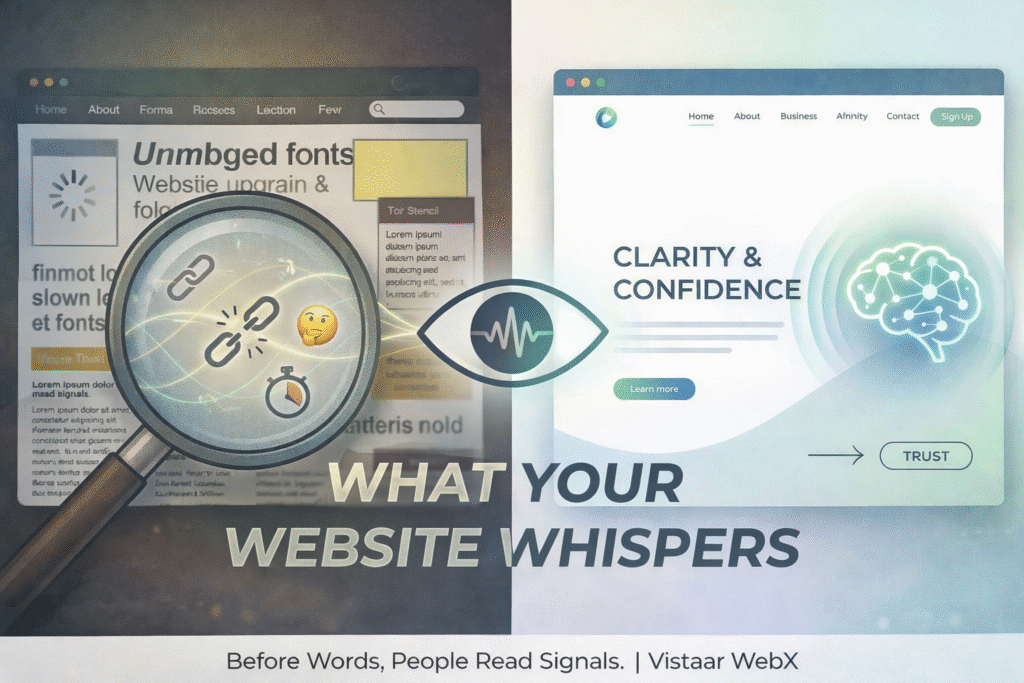
Most websites say more than businesses realise. Not through slogans or headlines. Not through carefully written “About Us” sections. But through small signals that visitors pick up without thinking. Before someone understands what you offer, they form an opinion about who you are. That judgment happens quietly, and it’s often based on things you never intended to communicate. What your website is accidentally telling visitors often becomes clear before they read a single word. Before Words, People Read Signals Visitors don’t arrive ready to analyse your website. They arrive cautious. They notice how fast the site loads. They notice whether things feel organised or slightly chaotic. They notice whether the website feels current or neglected. None of this is conscious. But it shapes trust immediately. A slow site suggests carelessness. A cluttered layout suggests confusion. An outdated design suggests a business that hasn’t kept up. Even if none of those things are true. Inconsistency Speaks Louder Than Content When different pages sound like they were written by different people at different times, visitors feel it. One page is formal. Another is overly casual. Another feels sales-heavy. That inconsistency quietly suggests a lack of clarity inside the business itself. If the brand isn’t sure how to speak, visitors wonder what else might be unclear. Consistency doesn’t mean everything looks the same. It means everything feels connected. What Silence Can Say Sometimes the strongest message is what’s missing. There’s no clear sense of who the business is meant for. The next step isn’t obvious. And for someone visiting for the first time, reassurance is missing. When key information is absent, people don’t assume you’ll explain it later. They assume you didn’t think about it. Unanswered questions create hesitation. Hesitation creates exits. Design Choices Reflect Confidence A website that tries to say everything at once usually feels insecure. Too many sections. Too many messages. Too many calls to action competing for attention. On the other hand, a website that chooses what not to show feels confident. Space feels intentional. Content feels considered. Visitors don’t interpret this as minimalism. They interpret it as clarity. Tone Reveals More Than Strategy Visitors may not read every word, but they absorb how the words sound. Is the language trying too hard to impress? Does it feel defensive or overly explanatory? Or does it sound calm and sure of itself? Tone signals how comfortable a business is with its own value. When the tone feels steady, people relax. When it feels forced, they become cautious. The Unintentional Story Your Website Tells Every website tells a story, whether planned or not. It tells visitors how much attention you pay to detail. How clearly you think. How seriously you take their time. That story forms before anyone clicks a button. A Thought to End On A website doesn’t need to say everything. It needs to say the right things clearly, and leave the rest quiet. At Vistaar WebX, we’ve seen that the most effective websites aren’t the most impressive-looking ones. They’re the ones that feel intentional, consistent, and thought through. Visitors may not remember your exact words. But they will remember how your website made them feel and what it quietly told them about your business

What Your Website Is Accidentally Telling Visitors About Your Business Read More »
minimal branding strategy with clean design

Why Minimal Brands Will Always Win

Let’s be honest for a moment. Everyone has been in that room with the one person who keeps talking nonstop. Louder, longer, trying harder with every sentence. And instead of listening, everyone is just thinking about how to leave. That is exactly how most marketing feels today. Too many brands are throwing colours, fonts, animations, and graphics at people because they are scared that simplicity will make them look invisible. The irony is, all that noise usually does the opposite. It makes them forgettable. The Clutter Trap At Vistaar WebX, this is something we see all the time. Businesses think adding more will make them look bigger or more impressive. In reality, it just makes things confusing. We call it the clutter trap. If a brand truly wants to move from ordinary to premium, the first step is not adding. It is removing. Minimalism is not about following a design trend or copying what looks good on Pinterest. It is a clear signal of confidence. It shows that the brand knows exactly what it stands for and does not need distractions to explain itself. Space Is Not Empty. It Is Intentional. Think about the most premium brands in the world. Their websites feel calm, their stores breathe, and their designs leave space on purpose. That space is not accidental. It is a choice. When a brand is comfortable leaving things unsaid, it shows confidence. It tells customers that the product or service does not need loud tricks to be noticed. The experience feels considered, not desperate. People are not pushed to click. They are invited to stay. Why Less Actually Works Better Minimal brands tend to perform better for a few simple reasons. Clear design improves usability. When the message is focused, people understand it faster. Navigation becomes easier. Decisions feel lighter. The overall experience improves without effort. There is also longevity. Busy designs age quickly. What looks exciting today often feels outdated in a few months. Minimal design, on the other hand, stays relevant for years. And then there is the practical side. Fewer heavy elements mean faster load times. Faster sites mean better SEO, lower bounce rates, and a smoother journey for users. Minimalism is not just aesthetic. It is functional. Finding the Soul of the Brand At its core, minimalism is about clarity. It is about knowing what matters and letting go of everything else. One strong font. One or two intentional colours. One clear voice. Walk through any busy street in Bhopal and it becomes obvious. Neon signs everywhere, all competing for attention at once. It is exhausting. The sign that actually stands out is the one that does not shout. In a world that is constantly loud, simplicity becomes powerful. The Vistaar Take Being extra is easy. Anyone can do it. Being essential takes thought, restraint, and confidence. That is where real brand growth begin

Why Minimal Brands Will Always Win Read More »

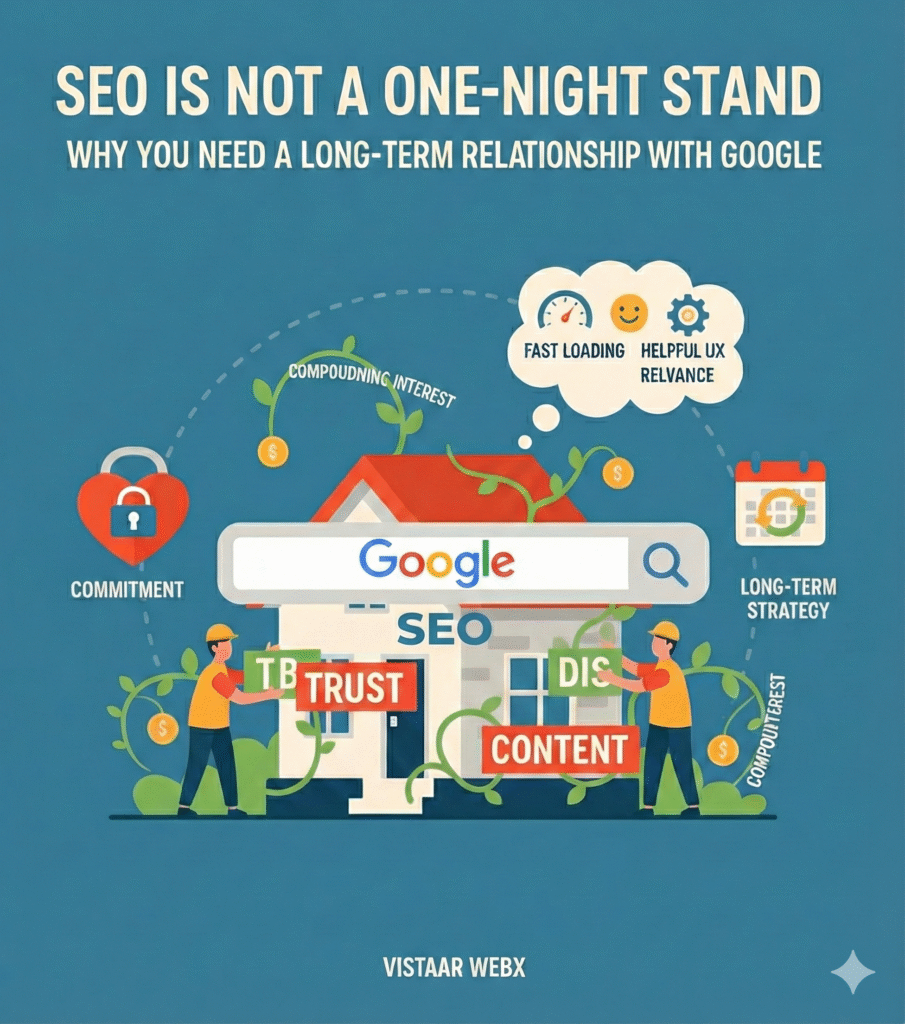
SEO long-term strategy concept illustrating relationship-based growth with Google using charts, calendar, and search icons

SEO is Not a One-Night Stand: Why You Need a Long-Term Relationship with Google.

Why You Need a Long-Term Relationship with Google Let’s be honest. Most brands treat Google like a bad date. They show up, spend a little money on a “quick fix” campaign, expect instant love, and then disappear when they don’t see a return in forty-eight hours. At Vistaar WebX, we call it out the nonsense. SEO isn’t a one-time transaction. It is a long-term relationship that requires commitment, trust, and a lot of high-quality conversation. The “Ghosting” Problem If you stop posting content or optimizing your site after one month, Google will ghost you. It is that simple. Search engines favour brands that are consistent, reliable, and actually helpful to their audience. You can’t just “do SEO” once and expect to stay on page one in competitive digital space. Why You Can’t Rush the Romance Trust Takes Time: Google needs to verify that your site is safe, fast, and authoritative before it recommends you to thousands of users. The Algorithm is Always Learning: What worked in 2024 won’t work in 2026. A long-term strategy allows us to adapt your “vibe” to what the search engine is currently looking for. Compounding Interest: Much like our Marketing SIP approach, the work we do today builds on the work we did last month. Each high-quality blog post or backlink adds to your brand’s total “wealth”. Beyond the Keywords Real SEO in 2026 isn’t about stuffing words into a page until it sounds like a robot wrote it. It is about User Experience (UX). Is your site “smooooth”? Does it load before the user loses interest? Does it actually solve their problem?. If the answer is no, Google will break up with you. The Vistaar Take: You don’t need a “growth hack.” You need a growth partner. We don’t just get you to the top; we make sure you have the personality to stay there.

SEO is Not a One-Night Stand: Why You Need a Long-Term Relationship with Google. Read More »

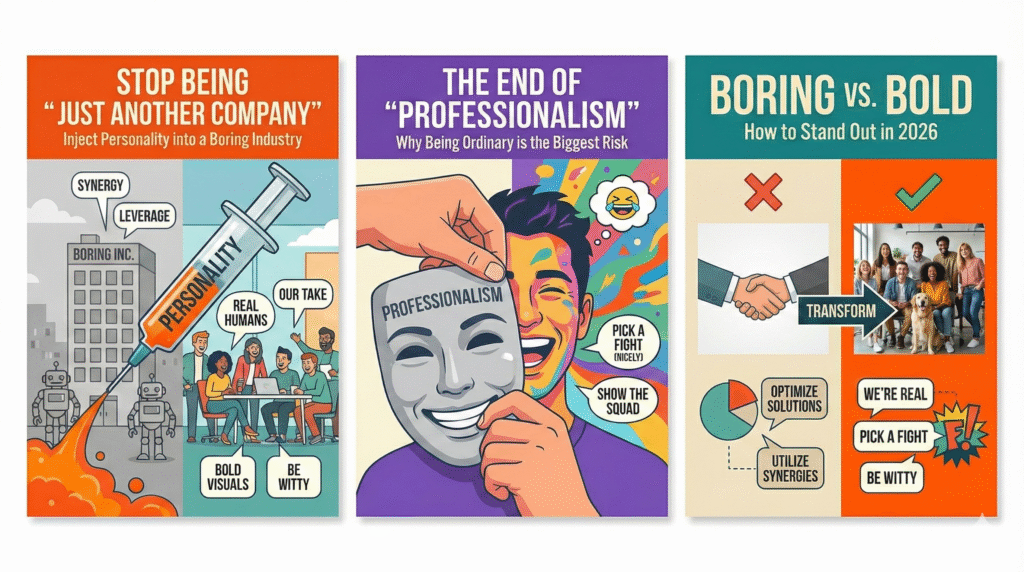
brand personality in 2026 for businesses

Stop Being “Just Another Company” in 2026: 5 Ways to Inject Personality into a Boring Industry.

Let’s be real for a second. Most websites feel like they were written by a robot that’s had too much coffee and zero soul. In an era of AI everything, “professionalism” has become a code word for invisible. At Vistaar WebX, we think being ordinary is the biggest risk you can take. Whether you’re in logistics or healthcare, here is how you stop blending into the background. Ditch the “Corporate Speak” Stop “leveraging synergies” and “utilizing end to end solutions”. Humans don’t talk like that. If you wouldn’t say a sentence to a client over a cup of tea in Bhopal, don’t put it on your site. If your copy feels like a LinkedIn bot wrote it, delete it. Show the “Squad” People buy from people, not logos. Hide those stock photos of people in suits shaking hands. It is fake and everyone knows it. Feature your actual team, messy desks and all. At Vistaar, we lean into our Squad culture because transparency builds more trust than a polished corporate wall ever could. Pick a Fight (Nicely) Personality comes from having an opinion. Take a stand on a status quo everyone hates. Maybe it is why expensive logos are a waste of money for startups. When you say what everyone else is thinking, you instantly become a leader instead of just another vendor. Visual Storytelling If your industry is dry, your visuals need to be high octane. Clean design isn’t about being empty. It is about removing the clutter so your message can actually breathe. Move away from generic blue and grey palettes. Use bold typography and custom photos that tell a story. Be Witty, Not Just “Wise” Who says B2B can’t be funny? A well placed joke breaks the ice. It shows you are confident enough in your work that you don’t need to hide behind a stiff collar. Use humor to talk about client pain points. If they are frustrated with slow service, joke about it and then show them the solution. The Vistaar Take: In 2026, your greatest competitive advantage isn’t price. It is your personality.

Stop Being “Just Another Company” in 2026: 5 Ways to Inject Personality into a Boring Industry. Read More »

The Marketing SIP: Why Your Budget Needs to Think Like an Investor

Let’s be real, most business owners treat marketing like a high-stakes night at the casino. They walk in with a bag of cash, put it all on one “jackpot” campaign, and then walk away grumbling that “marketing doesn’t work” when they don’t hit the big time immediately. At Vistaar WebX, we find that approach a bit… ordinary. Marketing isn’t a gamble; it’s an asset. If you want to build a brand that actually dominates the market, you have to stop “spending” and start “investing”. The smartest way to do that? The Marketing SIP (Systematic Investment Plan). What exactly is a Marketing SIP? In the world of finance, an SIP is about consistency, investing small, regular amounts regardless of whether the market is up or down. Over time, that discipline creates serious wealth. A Marketing SIP follows that same logic. Instead of blowing ₹5 Lakhs on a single billboard or one influencer shoutout that everyone forgets by Tuesday, you commit to a monthly budget to test, learn, and grow. You aren’t chasing a “one-hit wonder.” You’re building compounded growth. Why the “Investor Mindset” Wins Consistency Over Chaos Many brands go “all in” for one month and then go radio-silent for three. This is how brands die. A steady SIP approach keeps your name “always-on” so you’re the first person people think of when they’re ready to buy. Sporadic noise just confuses people; consistency builds a relationship. The Power of “Rupee Cost Averaging” for Leads An SIP lets you find “cheap wins.” Because you’re always active, you’ll notice things others miss—like which Meta ad works better on rainy Tuesdays or which blog post is driving free traffic from Google. You find the low-cost channels while your competitors are busy overspending on whatever is trendy this week. Data Doesn’t Have Feelings Investors don’t pour money into failing stocks, and neither should you. A Marketing SIP gives you the data to see what’s actually working. If your Local SEO is outperforming your ads, you move more of next month’s “SIP” into SEO. You scale based on facts, not just a “gut feeling. How to Build Your Portfolio To scale like an investor, try dividing your monthly budget into these three buckets: The Foundation (60%): This is your “Blue Chip” play. It goes into the essentials—SEO, a website that actually converts, and a solid social media presence. The Growth Engine (30%): This is your “Mid-Cap” fund. It’s for Performance Marketing (Ads) and lead generation where you expect a quicker return. The Experiment (10%): This is your “Moon-shot.” Want to try a viral reel trend, an AI tool, or a weird local collaboration? Use this 10%. If it fails, your foundation is still solid. If it wins, it becomes part of your Foundation next year. The Bottom Line: Stop Spending, Start Compounding Those “overnight success” stories you see online? They’re usually just the result of 18 months of a disciplined Marketing SIP. At Vistaar WebX, we don’t just build sites; we manage your digital portfolio. Marketing shouldn’t be a luxury you only afford when business is booming. It’s the engine that makes the business boom. Ready to stop gambling and start investing? Let’s build a Marketing SIP that makes your brand a powerhouse.  

The Marketing SIP: Why Your Budget Needs to Think Like an Investor Read More »

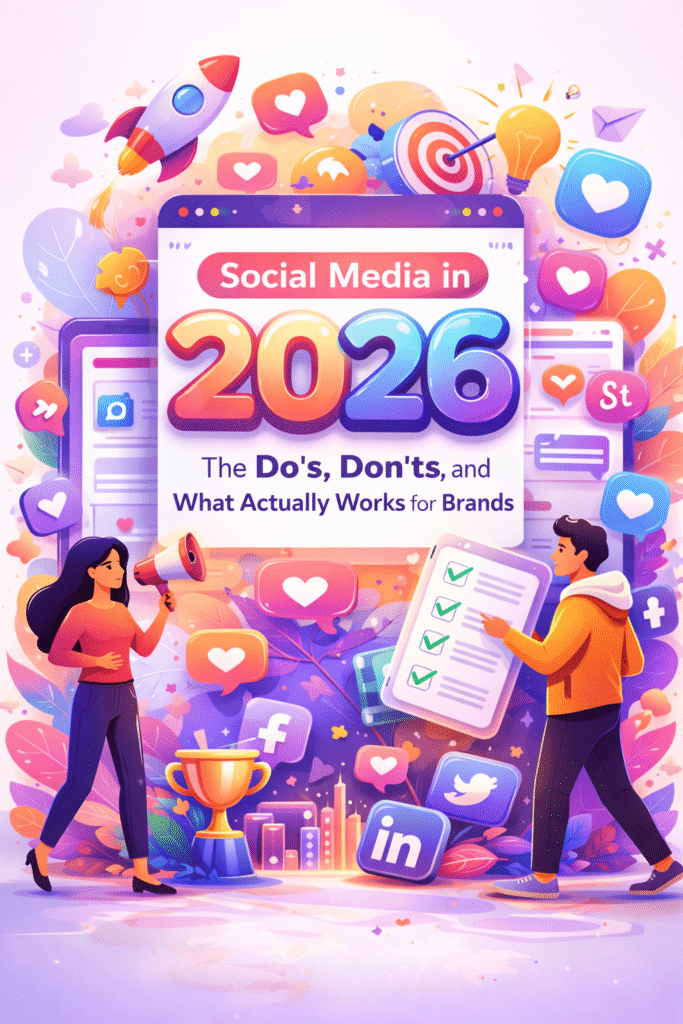
Social Media in 2026: The Do’s, Don’ts, and What Actually Works for Brands

Social media hasn’t become harder. It’s become easier to get wrong. People still scroll the same way they always have. What’s changed is patience. Brands get a few seconds, sometimes less, before being ignored. Once that happens, no format or trend really saves the post. Most mistakes aren’t dramatic. They’re familiar enough to feel harmless. DO: Know Why a Post Exists DON’T: Post Just to Stay Active A lot of brand content exists simply because it’s “time to post.” That decision alone shapes how the content performs. Most people move past that kind of post almost automatically, not because it’s bad, but because it doesn’t give them a reason to stop. Before publishing anything, it helps to pause and ask what the post is meant to achieve in real terms. If nothing clear comes to mind, that hesitation usually says enough. DO: Let Intent Decide Frequency DON’T: Let Posting Frequency Replace Thinking Posting daily used to feel responsible. Now it often feels forced. High-frequency posting without intention creates more content but less impact. Quality drops, repetition creeps in, and the brand starts sounding louder without becoming clearer. In practice, fewer posts with sharper intent tend to land better. Silence isn’t always a problem. Random activity often is. DO: Focus on Engagement That Shows Effort DON’T: Judge Success Only by Reach Big numbers are easy to present and hard to question. What matters more is how people respond to saves, comments, replies, and shares. These show whether the content actually resonated or simply passed through the feed. A smaller audience that reacts consistently is often more valuable than a larger one that doesn’t. DO: Adapt Trends Thoughtfully DON’T: Treat Trends Like Obligations Trends move quickly. Brands don’t – and shouldn’t. Using every trending audio or format doesn’t make a brand feel current. More often, it makes the account feel unsure, especially when the trend has no real connection to the audience or message. Some trends are worth adapting. Many aren’t. Ignoring a trend is sometimes the more confident choice. DO: Write the Way People Actually Speak DON’T: Sound Like a Presentation Deck Captions that feel overly polished tend to stand out, just not for the right reasons. People respond better to language that feels direct and natural. Not casual for the sake of it. Not corporate either. Clear enough to understand without effort. If a caption reads as if it belongs on a slide, it usually feels out of place on social media. DO: Balance Promotion With Perspective DON’T: Turn Your Feed Into a Sales Page Too much self-promotion slowly wears people down. When every post talks about services, achievements, or announcements, engagement doesn’t drop suddenly, it fades quietly. Content that explains something clearly or offers a point of view often builds more trust than direct promotion alone. Social media works better when it feels like interaction, not advertising. A Thought to End On Social media rewards intention more than activity. Brands that slow down just enough to think tend to sound clearer, feel more trustworthy, and stand out without forcing attention. At Vistaar WebX, we’ve seen that the strongest social media strategies aren’t built on doing more, they’re built on doing what actually fits the brand. Attention is limited. Using it well matters.

Social Media in 2026: The Do’s, Don’ts, and What Actually Works for Brands Read More »

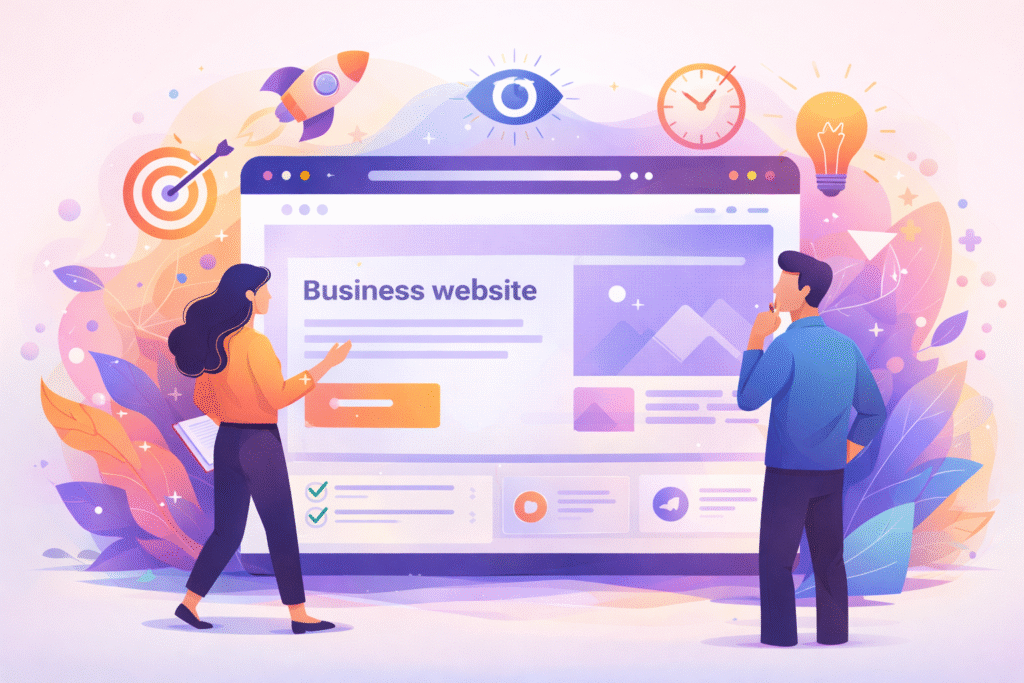
business website first impression design

What People Notice First When They Visit a Business Website

Most people don’t read a website the way businesses expect them to. They don’t start at the top. They don’t carefully follow the structure. They don’t absorb everything you’ve written. They scan. They pause. They make quick judgments, often without realising it. And within those first few moments, an opinion forms. Sometimes it’s clear. Sometimes it’s vague. But it’s rarely neutral. What’s interesting here is that what people notice first is rarely what businesses think they notice. It Starts With a Feeling, Not a Feature Before visitors understand what you offer, they register how the website feels. Is it calm or cluttered? Clear or slightly overwhelming? Confident or hesitant? This reaction happens almost immediately. Long before someone reads a headline or checks a service page, they’re already deciding whether staying makes sense. A website that feels organised and intentional encourages exploration. One that feels busy or confusing creates quiet resistance. People may not be able to explain this feeling, but they act on it anyway. Visual Order Is Not the Same as Design Good design, though, isn’t just about looking modern. What visitors really notice is visual order. How easily their eyes move. Whether elements feel aligned. Whether spacing gives them room to breathe or forces them to work harder than necessary. A website can have attractive colours and still feel uncomfortable to navigate. When there’s too much happening at once, multiple messages competing for attention, people disengage faster than expected. Clarity, not decoration, is what usually holds attention. Headlines Get Read Before Anything Else If someone reads anything at all, it’s usually the main headline. Not the subtext. Not the buttons. Not the paragraphs below. That headline quietly answers a few questions: Am I in the right place? Is this relevant to me? Do I want to continue? When the headline is vague or overly clever, visitors hesitate. When it’s clear and grounded, they move forward, even if they don’t consciously realise why. People Notice What’s Missing Too Sometimes what stands out most is what isn’t there. No clear explanation. No sense of who the business is for. No obvious next step. When key information feels absent, people don’t search harder – they leave. This happens often with businesses that assume visitors already understand them. Online, that assumption rarely holds. Silence and ambiguity create friction just as quickly as clutter. Tone Shapes Trust More Than Words Visitors don’t analyse tone. They absorb it. Does the website sound human or overly formal? Confident or defensive? Helpful or self-focused? Tone comes through in small ways,  how services are described, how sentences are structured, how direct the language feels. Even without reading closely, people sense whether a website is speaking to them or at them. That sense plays a big role in whether trust begins to form. The First Scroll Is a Decision Point By the time someone scrolls once, a decision has already been made. Scrolling usually means interest. In contrast, Not scrolling often means doubt. That first scroll happens only if the top of the page gives enough clarity and comfort to continue. It doesn’t need to explain everything. It just simply needs to feel worth another moment. That’s a small window, and an important one. A Thought to End On A business website isn’t experienced line by line. Instead it’s experienced in impressions. People notice clarity before content, structure before strategy, and tone before detail. At Vistaar WebX, we’ve seen how small changes in layout, messaging, and flow can completely shift how a website is perceived, often without changing what the business actually offers. At the start of a new year, many businesses focus on adding more. Often the bigger impact comes from noticing what visitors already see, and how quickly they see it.

What People Notice First When They Visit a Business Website Read More »

annual marketing planning strategy

Why Annual Marketing Plans Fail Before They Even Begin

Every year starts the same way for many businesses. Annual marketing planning begins, Spreadsheets open. Targets are discussed. Campaign ideas start circulating. There’s a sense of urgency to “get moving” before competitors do. Marketing plans begin to take shape quickly, sometimes too quickly. And that’s usually where the problem starts. Most annual marketing plans don’t fail because the ideas are bad. They fail because they’re built on assumptions that haven’t been checked. Planning Often Starts With Activity, Not Direction This is where annual marketing planning often becomes busy instead of effective. When businesses sit down to plan marketing for the year, the conversation often jumps straight to execution. Which platforms should we focus on? How many campaigns do we need? How often should we post? These are valid questions, but they’re rarely the first ones that should be answered. Without a clear sense of direction, marketing activity becomes busy rather than effective. Plans look full on paper, yet disconnected in practice. When direction is missing, even well-executed campaigns struggle to create momentum. Goals Are Set Before the Foundation Is Clear Annual plans usually come with ambitious goals, growth, visibility, leads, and expansion. What’s often missing is an honest check on whether the current marketing setup can support those goals. Messaging, audience clarity, consistency, and internal alignment tend to be assumed rather than reviewed. As a result, marketing plans aim higher without strengthening the base. Over time, this shows up as underperforming campaigns, constant revisions, or a feeling that marketing is “working hard but not landing.” Too Many Priorities Creep In Early At the start of the year, everything feels important. New platforms seem promising. New formats feel necessary. There’s pressure to do more than last year. Annual marketing plans quickly become crowded, trying to accommodate every idea at once. The problem isn’t ambition; it’s dilution. When too many priorities exist from the beginning, focus disappears. Teams spread themselves too thin, and execution quality suffers. Plans that look comprehensive often struggle to stay consistent beyond the first quarter. Marketing Is Asked to Fix Structural Issues Another common reason annual plans fail is that marketing is expected to compensate for deeper issues. Unclear positioning. Inconsistent communication. Unfocused offerings. Instead of addressing these at the source, marketing is tasked with “making it work.” Campaigns are adjusted repeatedly, messaging shifts mid-year, and plans slowly lose structure. Marketing works best when it amplifies clarity, not when it’s trying to create it from scratch. Rigid Plans Leave No Room for Reality Annual marketing plans are often treated as fixed roadmaps. In reality, markets change. Audiences respond differently than expected. What looked promising in January may feel outdated by April. When plans are too rigid, teams either force execution or abandon the plan altogether. Plans that work tend to be directional, not restrictive. They leave room for adjustment without losing their core intent. What Successful Plans Do Differently Marketing plans that hold up through the year usually share a few quiet traits. They’re built after reviewing what already exists, not before. They prioritise fewer, clearer objectives. They allow for learning and refinement without constant reinvention. Most importantly, they’re grounded in clarity about audience, message, and purpose — before execution begins. A Thought to End On Annual marketing plans don’t fail because businesses don’t try hard enough. They fail because planning often skips the uncomfortable pause — the moment where assumptions are questioned, and foundations are checked. At Vistaar WebX, we’ve seen that the strongest plans aren’t the most detailed ones. They’re the ones built with enough clarity to adapt without losing direction. The year moves fast once it starts. A plan that begins with intent has a better chance of lasting.

Why Annual Marketing Plans Fail Before They Even Begin Read More »

review your brand before marketing strategy

What to Review in Your Brand Before Planning This Year’s Marketing

Before calendars fill up and campaigns start taking shape, most businesses jump straight into planning.Taking time to review your brand before marketing helps ensure that what you build this year rests on clarity, not assumptions. Before planning this year’s marketing, it’s worth taking a quiet look at your brand, not to redesign it, but to understand whether it’s actually ready to support what you’re about to build. Start With the Basics You Assume Are Clear Most teams believe they’re clear on what their brand stands for. In practice, that clarity tends to live in people’s heads rather than in the brand’s output. Different team members explain the business differently. Different platforms highlight different priorities. None of it is wrong, but together it creates friction. Before planning marketing activity, it helps to ask: Can we explain what we do in one simple sentence? Would different people in the business describe us the same way? Does our messaging reflect where the business is now, not where it was a year ago? If these answers feel inconsistent, marketing plans will inherit that confusion. Look Closely at How Your Brand Communicates Marketing amplifies whatever already exists. If your brand communication is clear, marketing makes it stronger. If it’s scattered, marketing spreads that scatter faster. Review how your brand sounds across touchpoints, website copy, social media captions, emails, and ads. Pay attention to tone more than tactics. Does it feel like one voice, or several? Does it sound confident, or overly explanatory? These details seem small, but they shape how people respond to your campaigns later. Check for Consistency Before You Add More At the start of the year, there’s often a push to “do more”: more platforms, more content, more activity. Before adding anything, it’s worth checking whether what already exists is aligned. Are visuals consistent across channels? Does your messaging change depending on where someone finds you? Do your campaigns match the impression your website creates? Inconsistency doesn’t always look dramatic. Sometimes it just feels slightly off. And that feeling is enough to reduce trust, even if the marketing itself is well executed. Revisit Who You’re Actually Talking To Audiences change quietly. Over time, businesses attract different kinds of customers than they originally expected. Services evolve. Priorities shift. But branding often stays frozen around an earlier version of the audience. Before planning marketing for the year, it helps to ask: Who engages with us most now? Who do we actually want more of this year? Are we still speaking to the right group? Marketing works best when it speaks to a clearly defined audience, not a general one. Make Sure Your Brand Can Support Your Goals Marketing goals don’t exist in isolation. If your goal this year is growth, visibility, or expansion, your brand needs to be able to carry that weight. If the brand feels unclear or inconsistent, marketing efforts tend to work harder for smaller returns. Reviewing your brand first helps you spot gaps early, before they show up as underperforming campaigns or mixed responses. A Practical Way to Approach It This review doesn’t need to turn into a long internal exercise. Sometimes it’s as simple as stepping back and asking: Does our brand feel clear from the outside? Are we communicating with intention, or just staying active? Would our current brand help or hinder the plans we’re about to make? Those answers usually guide the next steps on their own. A Thought to End On Marketing plans set direction. Brand clarity sets momentum. Taking time to review your brand before planning this year’s marketing doesn’t slow things down; it reduces friction later. At Vistaar WebX, we’ve seen how brands that start the year with clarity tend to make sharper decisions, adjust less often, and move more confidently through the months that follow. The year will unfold quickly. Starting with the right foundation makes all the difference.  

What to Review in Your Brand Before Planning This Year’s Marketing Read More »

new year branding strategy for businesses

How to Improve Your Brand Identity in 2026: Strategies That Actually Work

Brand identity didn’t suddenly change overnight. But the way people react to brands has. Getting someone’s attention isn’t particularly difficult anymore. Holding on to it is. Most people scroll quickly, skim without real focus, and leave the moment something doesn’t feel relevant to them. Your brand gets a tiny window to make sense – and an even smaller one to feel worth staying with. More often than not, people don’t consciously decide to move on. They just do. That’s where many brands quietly lose ground. Brand Identity Is No Longer Just Visual Design still matters – that hasn’t changed. But design by itself doesn’t carry a brand the way it once did. What people respond to now is the experience around the visuals. The words you choose. The way you explain things. How clear or confusing your message feels when someone lands on your page for the first time. A brand can look polished and still feel distant. Most impressions are formed before a logo really registers – through language, tone, and how consistently your brand shows up over time. When that experience feels unclear, attention fades without much resistance. Positioning Comes Before Promotion A lot of brands try to fix uncertainty with visibility. More posts. More ads. Louder messaging. But when people can’t immediately understand who you’re meant for or why you exist, extra promotion rarely helps. It usually adds to the noise. Strong brand identity often begins with a slightly uncomfortable decision: choosing one clear direction and letting go of everything else that doesn’t support it. When positioning is clear, your messaging relaxes. When it isn’t, even good ideas start sounding strained. Consistency Is What Builds Trust Over Time Trust doesn’t form in a single moment. It builds slowly, through repeated interactions that feel familiar. If your website explains things one way, your social media speaks in a different tone, and your ads tell another version of the story, people notice the mismatch – even if they can’t articulate it. Consistency isn’t about repeating the same words everywhere. It’s about sounding like the same brand, wherever someone meets you. That sense of familiarity is what makes a brand easier to remember – and easier to trust. Let Your Content Carry Meaning Content created just to “stay active” rarely adds much to a brand. People tend to respond better to content that feels considered – content that explains something clearly, shares perspective, or answers a real question. Over time, blogs, posts, and videos start to reflect how your brand thinks, not just what it wants to sell. Gradually, this builds association. Your brand becomes linked with clarity, reliability, or insight. That’s usually the point where content stops feeling like marketing and starts doing the quieter work of brand building. Human Brands Win Attention People have become noticeably better at sensing when messaging feels rehearsed. Perfect phrasing and big promises don’t carry the same weight they once did. In many cases, they create distance instead of trust. Brands that sound human – measured, honest, and grounded – feel easier to engage with. This isn’t about being casual or informal. It’s about being intentional rather than performative. Brands that communicate like real people tend to leave a stronger, longer-lasting impression. Brand Identity Is Ongoing Work There isn’t a final version of a brand identity. Markets shift. Platforms change. Expectations move. The brands that tend to hold attention over time are the ones willing to revisit their messaging, notice what’s no longer landing, and make adjustments without losing their sense of direction. Refinement isn’t a weakness – it’s usually a sign that a brand is paying attention. A Thought to End On Strong branding isn’t about being everywhere or saying everything. It’s about being clear enough to recognise, consistent enough to trust, and human enough to feel believable. When those elements come together, brand identity stops being something you explain and starts being something people sense. At Vistaar WebX, we’ve seen how brands grow differently when identity is treated as a long-term foundation rather than a quick fix. In crowded digital spaces, that kind of clarity doesn’t shout.  It simply stays.

How to Improve Your Brand Identity in 2026: Strategies That Actually Work Read More »